Main Conference Keynotes
We are delighted to announce that the esteemed speakers listed below have graciously accepted our invitation to deliver keynote speeches at the main conference of AACL-IJCNLP 2026 (dates and times of the talks will be announced soon):
Yulan He, King’s College London
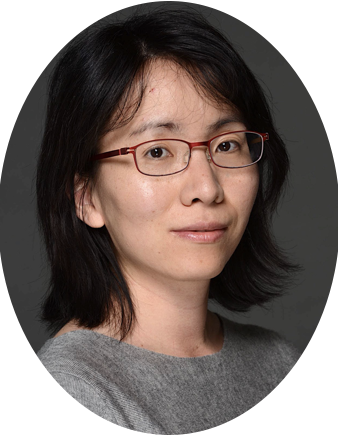
Title: Beyond Self-Play: Towards Effective Self-Evolution in LLMs
Abstract
Can large language models keep improving through experience they generate themselves? Self-play and self-generated experience offer promising routes. But producing more synthetic data does not necessarily lead to sustained model capability growth. This talk argues that effective self-evolution depends on whether the learning pipeline continues to provide learnable information. Drawing on our recent work, I will examine several ways such information can arise, including generating informative self-play experience, learning directly from environment-generated experience, and actively seeking novel evidence rather than waiting for tasks to be provided. These studies suggest that effective self-improvement requires more than generating its own experience; it needs experience that contains useful information that the model can actually learn from.
Speaker’s Bio
Yulan He is a Professor in Natural Language Processing at King’s College London and a Turing AI Fellow. Her research focuses on making Large Language Models (LLMs) more reliable, interpretable, and safe, particularly in reasoning and agentic AI, with applications spanning across education, health, and science. She has received several awards for her research. Her five-year Turing AI Fellowship project was awarded the Best Research Project (Research Excellence) at the RAi UK AI & Robotics Awards 2026. She also received a Best Research Paper Award at the same awards ceremony. In addition, she is the recipient of a SWSA Ten-Year Award and a CIKM Test-of-Time Award.
Tim Baldwin, MBZUAI
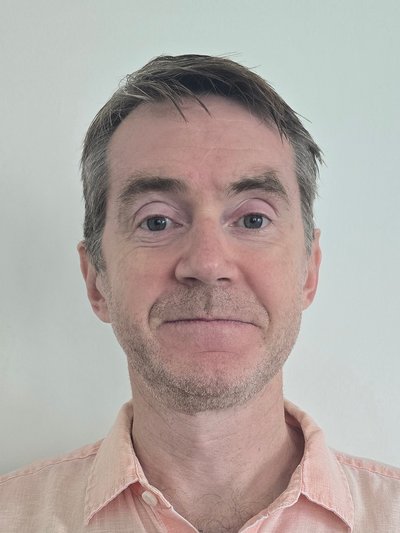
Title: Uncertainty, Belief, and Trust in Language Models
Abstract
Language models and other AI technologies are being used in an ever-increasing range of applications, including being trialled for decision support or automated decision-making in sensitive applications. A critical component of any such usage is the capability for the model to output a confidence/uncertainty assessment associated with any output, or (statistical) belief underlying a particular action. In this talk, I will present recent work on uncertainty estimation and belief updates, with a particular focus on practical utility in improving model performance and efficiency, and enabling humans to perform tasks more effectively.
Speaker’s Bio
Tim Baldwin is Professor of Natural Language Processing at Mohamed bin Zayed University of Artificial Intelligence (MBZUAI), in addition to being a Melbourne Laureate Professor in the School of Computing and Information Systems at The University of Melbourne, and Co-founder and Chief Scientist of startups including LibrAI (focused on AI safety) and Examn AI (focused on dialogue-based candidate profiling). At MBZUAI he has also held positions including Provost, Associate Provost, and Foundation Chair of the Department of Natural Language Processing.
Tim completed a BSc(CS/Maths) and BA(Linguistics/Japanese) at The University of Melbourne in 1995, and an MEng(CS) and PhD(CS) at the Tokyo Institute of Technology in 1998 and 2001, respectively. He joined MBZUAI at the start of 2022, prior to which he was based at The University of Melbourne for 17 years. His research has been funded by organisations including the Australian Research Council, Google, Microsoft, Amazon, Xerox, ByteDance, SEEK, NTT, and Fujitsu. He is the author of over 500 peer-reviewed publications across diverse topics in natural language processing and machine learning, and the recipient of a number of awards at top conferences.
Iryna Gurevych, Technical University of Darmstadt
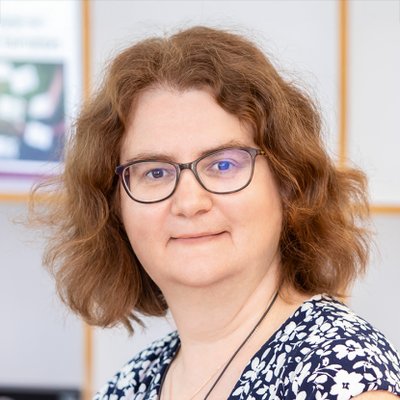
Title: NLP for Mental Health: Risk, Promise, Responsibility
Abstract
More than a billion people live with a mental health condition, yet care remains scarce and often a poor fit for the person receiving it — so people increasingly turn to unsupervised chatbots to fill the gap. Because language is the richest signal we have into someone’s psychological state, natural language processing is the key to doing this better. In this talk, I argue that NLP can genuinely help — but solving it takes clinical grounding, real data, and responsible evaluation, not just larger models. Drawing on work from my group, I show how large language models can turn therapy transcripts into treatment-relevant structure, how clinically grounded synthetic data eases the field’s privacy bottleneck, and why evaluation must reflect what clinicians actually care about — not just what’s easy to benchmark. I close with an invitation to build mental health AI that is personalized, privacy-aware, and responsibly evaluated: tools that support clinicians, not replace them.
Speaker’s Bio
Iryna Gurevych is a full professor of computer science at the Technical University of Darmstadt, Germany, where she founded and heads the Ubiquitous Knowledge Processing (UKP) Lab. She is a pioneer of computational argumentation and cross-document text modeling, with landmark applications to fact verification and misinformation detection, and her research extends to large language models and interdisciplinary NLP for the social sciences and humanities. Prof. Gurevych served as President of the Association for Computational Linguistics (ACL) in 2023 and is an ACL Fellow, a member of the German National Academy of Sciences Leopoldina and Academia Europaea, and a recipient of the 2025 Royal Society Milner Award.
Nizar Habash, New York University Abu Dhabi
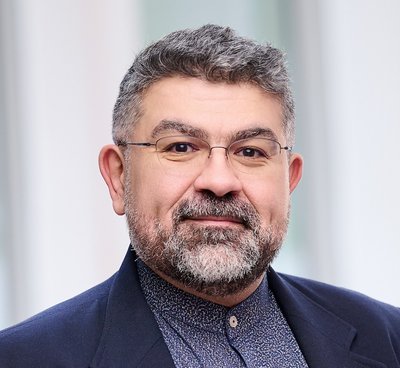
Title: The Genie of the LLM: What Shall We Wish for the Future of NLP?
Abstract
Large language models have given NLP extraordinary new capabilities. The genie is out of the lamp. The question is no longer only what it can do, but what we should ask it to do, how we know we got what we really wanted, and what it will do to us, our research, and our education.
I reflect on these questions through a multilingual journey from early work on English, Spanish, and Chinese to decades of Arabic NLP. Arabic provides a revealing case study: its morphology, dialects, scripts, and linguistic variation expose assumptions that broad multilingual experiments can overlook. Recent work illustrates both the remarkable capabilities of LLMs and the continuing value of other models, linguistic knowledge, targeted data, careful evaluation, and human expertise.
The future will not simply be a more powerful version of the present. As answers become easier to generate, good questions, deep understanding, and judgment become more valuable. Our challenge is not merely to build more powerful genies, but to choose our lamps wisely, and become better wish-makers.
Speaker’s Bio
Nizar Habash is a Professor of Computer Science at New York University Abu Dhabi (NYUAD). He is also the director of the Computational Approaches to Modeling Language (CAMeL) Lab. Professor Habash specializes in natural language processing and computational linguistics. He received his PhD in Computer Science from the University of Maryland College Park in 2003. His research includes extensive work on machine translation, morphological analysis, and computational modeling of Arabic and its dialects. Professor Habash has been a principal investigator or co-investigator on over 30 research grants. And he has over 300 publications including a book entitled “Introduction to Arabic Natural Language Processing”. Professor Habash is one of the inaugural recipients of the King Salman Academy for Arabic Language Award (2022); he is the recipient of the Antonio Zampolli Prize (2024); and he was selected as a Fellow of the Association for Computational Linguistics (2025). His website is www.nizarhabash.com.